

How to Design a Stable Base for a Brick Figure
Plan the footprint, stance and real connections of a brick figure base. Check space for people, pets and props before approving the display.
On this page
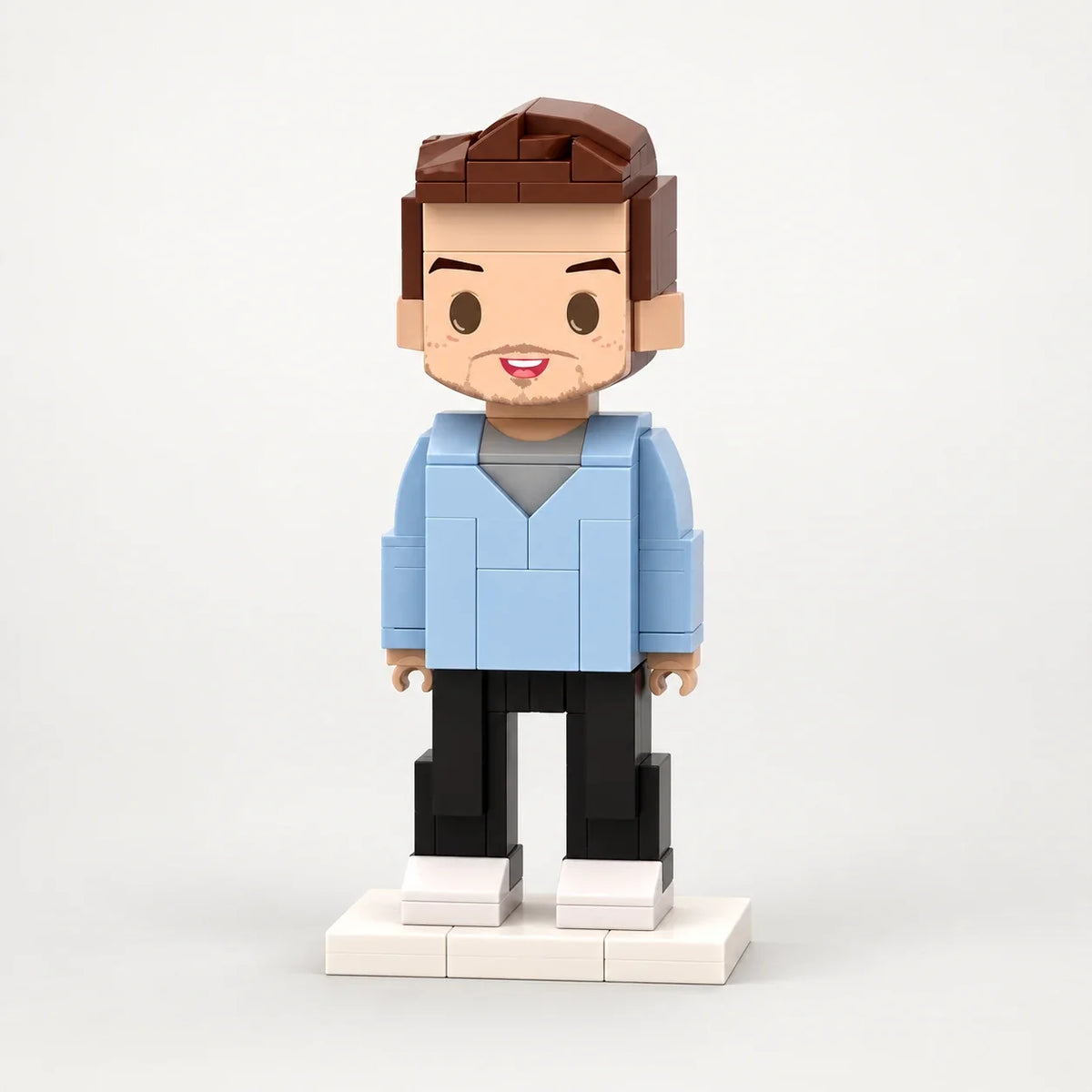
A brick display base has two jobs: it holds the composition together and gives the figure a suitable footprint for the place where it will stand. Choosing the base after adding a large head or extended accessory can leave you with a design that looks balanced in a picture but feels awkward on a shelf.
This guide is for planning a decorative display. It is not an engineering load rating or a toy-safety certification. Use the actual parts and connection system you have, and check the maker's guidance for an ordered piece.
Draw the footprint first
Sketch a top-down outline of the proposed base. Mark where the feet will connect, and leave room for the rest of the figure rather than placing both feet on the very edge.
Now add the shape of any pet, bouquet, photo frame or other accessory. A forward-projecting object can change the composition even if the feet themselves fit. Include the display frame or case when checking the space available on your desk.
For a couple, sketch the two figures together. A base that works for one person is not automatically suitable for two people placed close together with wide hair shapes.
Think about height as well as width
A tall figure with a large head should prompt a more careful look at its stance and base. Consider where its weight is supported, whether the legs connect firmly and whether the pose leans beyond the central footprint.
Do not solve every problem by adding decorative scenery. Sometimes a simpler upright pose, a less extended arm or a more suitable base does the useful work. Keep the silhouette readable while you make these adjustments.
Check real connections
Work with the parts in hand. Confirm that the feet and any other intended attachment points connect as designed. A digital illustration cannot prove that hidden connections exist or that an invented part will support the figure.
If an ordered product includes a photograph or frame, ask which components are fixed and which are separate. Do not assume every element in a styled scene is physically attached to the same base.

Try a gentle flat-surface check
Put the assembled model on a clear level surface away from an edge. Look for rocking, a loose connection or an accessory that pulls the composition out of balance. Correct an obvious problem before adding another decorative layer.
This should be a careful observation, not a shake, drop or impact test. Do not stress a delicate finished model to find its breaking point. If the piece is a custom order and something feels loose, ask the maker before applying glue or making structural changes.
Leave room for the story
Once the footprint works, decide where a short name, date or accent belongs. Keep the people as the focus. A base covered in props can make the figures harder to read and harder to handle.
The family example illustrates how several people, a photograph and accessories can share a composition. Confirm the actual product options and arrangement for your own order rather than assuming the example's dimensions apply to every group.
Before approving the design
Measure the shelf or desk space, including depth. Check the proposed base size with the seller, ask which accessories are included and decide how the piece will be lifted. Handling from a broad support is different from picking it up by a head or frame.
Combine this check with the hair construction guide and color brief. A coherent figure needs its appearance, connections and display footprint to work together; a base is part of that design, not simply a platform added at the end.

