

What Are Supports on a Resin 3D Print?
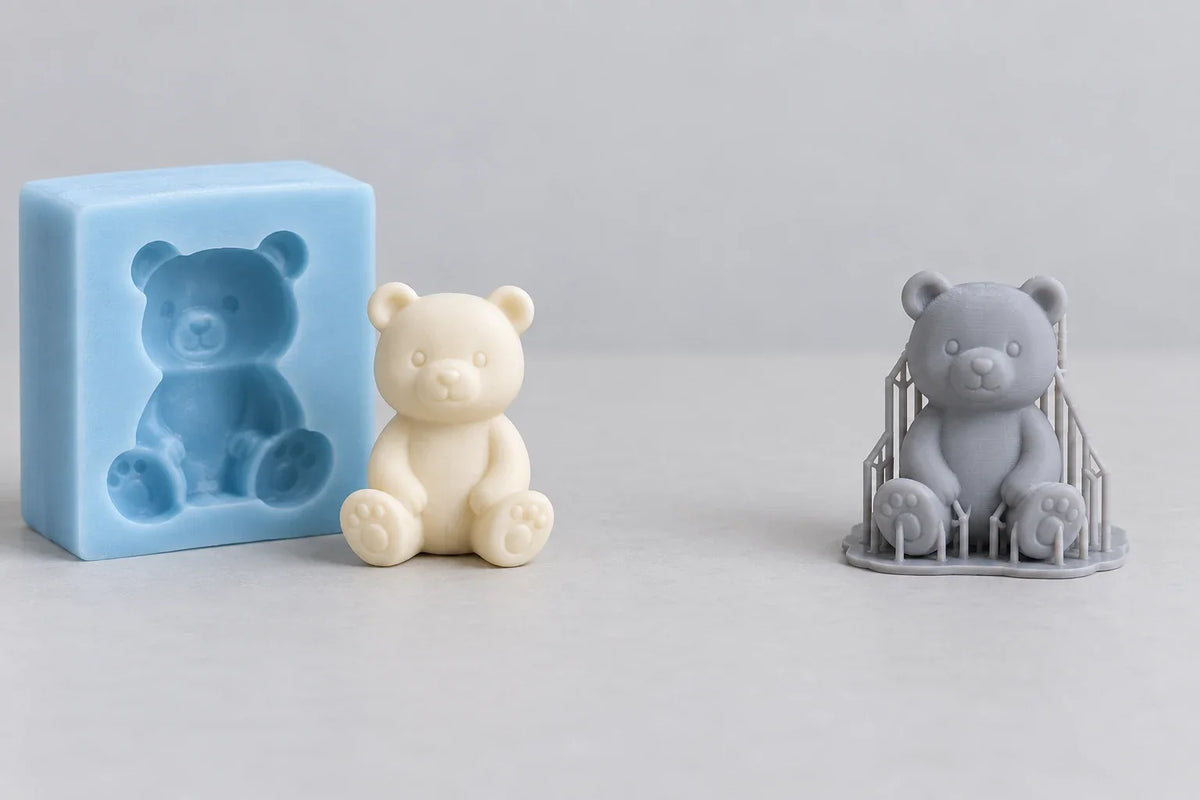
Supports on a resin print are temporary structures used during printing.
On this page
Supports on a resin print are temporary structures used during printing. They help a particular part of the model print successfully, then require removal and finishing as part of the material's specified workflow.
Supports belong to a print plan
Their placement depends on geometry, orientation, equipment and resin. A decorative image showing evenly spaced sticks beneath a figure is only a conceptual illustration, not a reliable support layout.
A hand, hair section or accessory that extends away from the main body can need special consideration. Making a model printable involves more than surrounding it with a visually pleasing arrangement of supports.
Contact points can leave evidence
Where a support touches the model, removal can leave a small mark or area needing finishing. That is different from the support being intended as part of the finished sculpture.
For a purchase, ask whether support removal and surface finishing are included. Compare close photographs of the actual finish rather than assuming a polished digital render represents an unprocessed print.
Removal order is process-specific
Washing, support removal and curing need to follow the printer and material supplier's directions. Do not pull structures from an unknown uncured print with bare hands or guess the correct sequence from a photograph.
Thin parts can be vulnerable during this stage. A competent production plan considers both successful printing and whether the finished details can survive subsequent processing and ordinary display handling.
Ask for finished dimensions
Support structures do not normally belong in the quoted display height or width. Clarify whether a measurement describes the finished object, its base or a larger print preparation model.
If you are comparing methods, read cast versus printed resin. A mold seam, a print support mark and an assembly joint arise from different processes; recognizing them helps you ask a precise question without assuming every surface trace means the same thing.

