

How to Paint Clothing Details on a Figurine
Clothing paint should clarify the outfit already suggested by the sculpt.
On this page
Clothing paint should clarify the outfit already suggested by the sculpt. Start with the large color areas, then add only the marks that help someone recognize the garment. A tiny patterned shirt does not need every line from the original fabric.
Choose a readable palette
Identify the dominant garment color, one contrasting feature and any essential personal detail. Compare them beside the face and hair colors before beginning. A sleeve stripe may matter more than several tiny buttons.
Use a cured sample to check the compatible paint system and finish. Follow the product directions for preparation and timing.
Paint the large blocks first
Work in a sequence that keeps wet surfaces from becoming handholds. Apply controlled layers according to the paint instructions and allow the required drying stage. Inspect the broad coverage before attempting a fine border.
Keep separate brushes or clean tools appropriately when moving between dark clothing and pale skin areas.

Suggest texture instead of copying it
For denim, knitwear or a busy print, select one visual cue that can survive at the figure's size. A simple seam, color shift or broad stripe may be enough. Too many marks can make fabric look dirty rather than detailed.
Test the pattern at normal display distance. If you can only understand it through a magnified photograph, simplify the treatment.
Finish the edges deliberately
Check cuffs, neckline and shoe boundaries from several angles. Correct with a compatible method rather than piling paint onto every uneven edge. Do not apply a coating until the paint is ready and the combination has been tested.
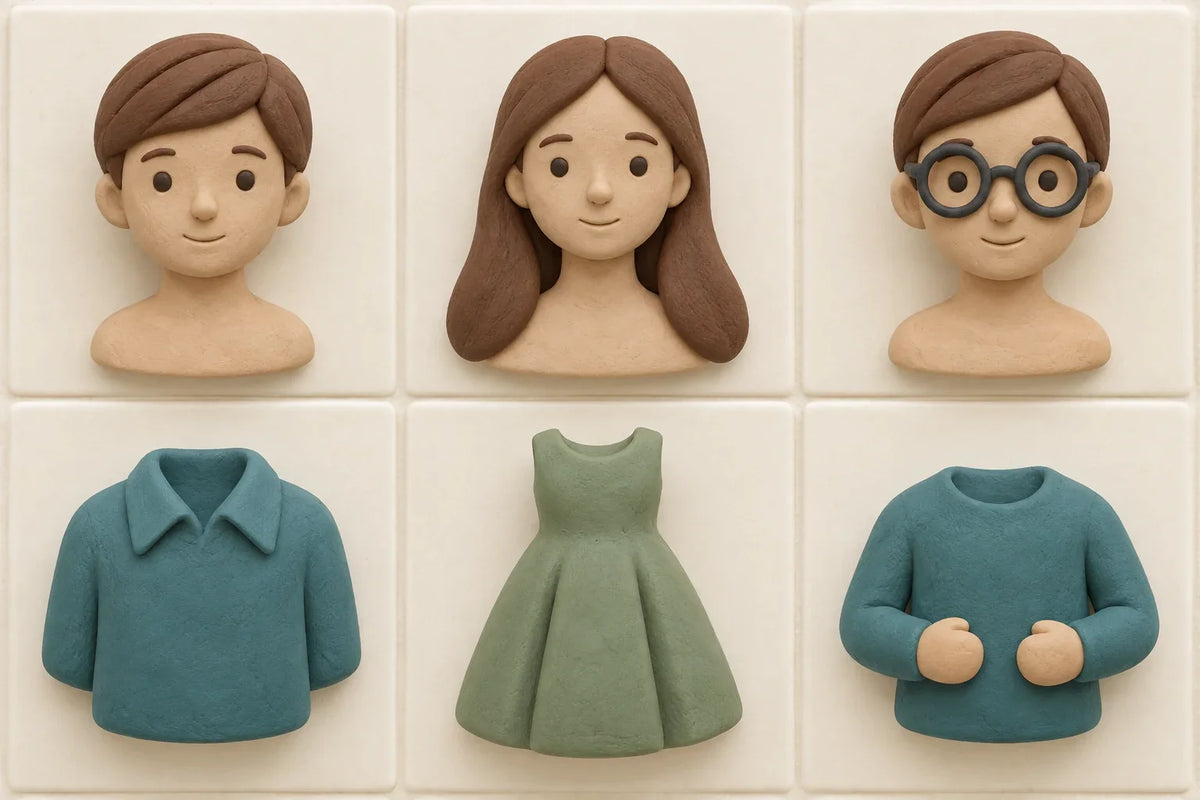
Save the color names and sequence in your notebook. The shirt-and-collar project provides a simple sculpt for practice. On a commissioned figure, identify which clothing cues are essential before approval so the miniature's finish follows a clear brief rather than a collection of competing details.

